

A sense of building tension. Visible is the chilled vapour exhaled by my fellow runners as they perform the "pre-race" jiggle on the beginning point.
A swift movement of the hips.
I'm at my local Saturday morning race and I'm focused. Three, two, one...
Wait a second. I must start my watch. The same goes for the guy next to me.
The person behind us tuts. I refuse to go until… there! GPS ready, I'm off.
Amidst the crowd, it's challenging to find a person without a smartwatch on it. And this isn't only us runners who rely on them.
It's a booming, massive market. Names like Samsung Galaxy lead the market, each with an extensive array of various versions to cater to a spectrum of budgets. Based on how advanced the watch you choose, price tags can vary between £100 to a significant investment.
"It makes me crazy, I'm unable to relax."
"It comforts me… It's like a supporter guiding me."
"Stop telling me I've experienced a restless night."
Just some of the responses I've had from other device users when I question what they think of theirs.
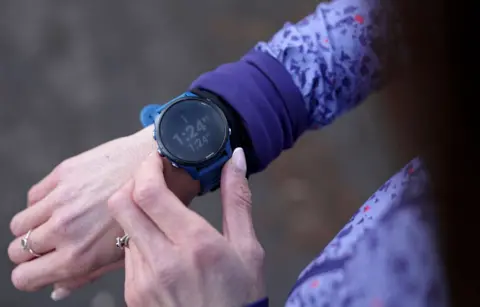
A Sea of Statistics
My feelings on mine? Right now, frustrating. It's indicating I'm off pace, leading me to doubt whether the foliage along my route are interfering with my satellite signal.
A vast number of us attach these small devices onto our wrists and use them all day and night, ostensibly at ease with the fact they're continuously monitoring us.
Long past are the days when we depended on them exclusively to give us an rough count of our pedometer reading. Today, they can analyse our nightly rest, stress levels, glucose levels, our VO2 max.
It's a challenge to find a physical metric they aren't designed to measure.
But do they do what they advertise? And are the data points we analyse a true reflection of the truth? Do they improve our daily wellness, or do the avalanche of metrics and constant notifications just increase our daily stresses?

A Love-Hate Relationship
"I find myself getting a a little fixated with mine," one user confesses.
While she values how her device tracks her exercise, she finds some of its other functions "daunting" at times - a feeling initially realised during a significant period.
Until she found out she could adjust the settings, her smartwatch repeatedly informed her she was not being productive enough. Now, the watch keeps telling her she's had a restless night.
"I am caring for a young baby, it's unnecessary for me to be notified my sleep was poor," she says. "That fact is perfectly well."
Is it not possible to just remove it?
"I suppose I could, theoretically, but I have this complicated dynamic with it," she continues. "I value it for its workout tracking, but I'm unsure whether all the other things it can now do is possibly excessive for me."
The Technology Behind the Tracking
Every device of smartwatch has its own novel way of monitoring your bodily functions and processing your data, but the most use sensors on the underside of the watch.
They usually project minute LED lights onto your skin which can detect blood flow, recording your BPM. More advanced devices detect changes in the bioimpedance that flows through the skin to gauge your stress levels.
The Professional Viewpoint
A data scientist says that in general for smartwatches, it's a "difficult line" - while the rapidly advancing tech could potentially prevent illness, "identifying issues before we show symptoms", it could also turn us device users into the "worried well".
He points out that some of the latest wearables can carry out tests like heart rhythm analysis, which constantly monitor how stable the heart is. They can alert if someone is experiencing atrial fibrillation (AF), where there is abnormal impulses in the heart causing an arrhythmia.
This does not mean someone is imminently going to suffer a heart attack, but it can give an advance notice they might be more vulnerable of a heart problem in the years to come.
But how to interpret these numbers is not straightforward. The expert worries that as additional features are incorporated, people may struggle to fully comprehend their data.
"I'm not entirely convinced that having the capacity to monitor so much data is such a good idea," he says.
A professor focusing on wearable tech echoes this sentiment. A study into the influence of wearable tech on a specific group of individuals with health issues suggested a significant portion of those who were given devices to monitor their heart health experienced greater stress and were "far more likely to use healthcare resources".
She identified a vicious circle with her patients - they spotted a worrying figure on their watch. They grew concerned. Their heart rate increased. They got more worried. They checked again, and their reading increased again.
"If we see stats about ourselves that we can't properly interpret then, understandably, we are going to want to know more," the psychologist says. "We check, we re-check - it becomes a vicious cycle."


